


In the oil and gas industry, quality cannot be treated like a final checkpoint.
It has to be built into the process from the beginning.
Every valve that enters a pipeline system carries real responsibility. It has to be designed correctly, manufactured consistently, documented properly, and tested with discipline. When valves are used in demanding oil and gas applications, the quality system behind the product matters just as much as the product itself.
That is where API Q1 certification comes in.
API Q1 helps define the quality management requirements for manufacturers serving the petroleum and natural gas industry. For valve manufacturers, it supports a structured approach to quality, documentation, traceability, risk management, and continuous improvement.
For engineers, operators, distributors, and procurement teams, API Q1 certification provides confidence that a manufacturer is not simply building products, but operating under a quality system designed for the demands of the oil and gas market.
What Is API Q1 Certification?
API Q1 is a quality management system specification developed by the American Petroleum Institute for organizations that provide products for the petroleum and natural gas industry.
While API 6D focuses on pipeline valve product requirements, API Q1 focuses on the quality management system behind the organization manufacturing those products.
In simple terms:
API 6D helps define what a pipeline valve must meet.
API Q1 helps define how the manufacturer controls quality while designing, manufacturing, and supporting those products.
That distinction matters.
A valve can be judged by its design, materials, testing, and performance. But consistent quality depends on the processes behind every stage of production. API Q1 helps ensure those processes are documented, controlled, audited, and continuously improved.
Why API Q1 Matters in Oil and Gas Manufacturing
Oil and gas applications are demanding by nature. Equipment must perform under pressure, meet project specifications, and support reliable operation in the field.
A quality management system helps reduce uncertainty across the manufacturing process.
API Q1 certification matters because it reinforces:
- Process control
- Product consistency
- Documented procedures
- Material traceability
- Quality planning
- Risk-based thinking
- Corrective action
- Continuous improvement
For manufacturers, these requirements create accountability. For customers, they create confidence.
When a valve is part of a pipeline system, there is no room for guesswork. Every step, from design and material selection to testing and documentation, has to be handled with care.
API Q1 vs API 6D: What Is the Difference?
API Q1 and API 6D are closely connected, but they are not the same thing.
API 6D is a product specification for pipeline valves. It applies to valve types such as ball valves, gate valves, plug valves, and check valves used in pipeline service.
API Q1 is a quality management system specification for manufacturers serving the petroleum and natural gas industry.
The easiest way to understand the difference is this:
API 6D focuses on the valve.
API Q1 focuses on the quality system behind the valve.
Both are important.
For pipeline valve manufacturers, API 6D helps demonstrate that products meet the requirements of pipeline service. API Q1 helps demonstrate that the manufacturer has a quality management system in place to support consistent, reliable production.
Together, they create a stronger foundation for trust.
What API Q1 Helps Verify
API Q1 certification is not about a single inspection or one-time review. It supports a broader quality system that affects how a manufacturer operates.
Key areas include:
Quality Management System Controls
API Q1 requires manufacturers to establish and maintain a structured quality management system. This helps ensure internal processes are documented, followed, reviewed, and improved over time.
Design and Development Controls
For manufacturers involved in product design, API Q1 supports controlled design processes, including design inputs, design outputs, review, verification, and validation.
Purchasing and Supplier Controls
Quality does not begin only when parts arrive at the facility. API Q1 places emphasis on controls related to purchasing, suppliers, and externally provided products or services.
Production and Service Controls
Manufacturing processes must be planned and controlled to help ensure product consistency. This includes procedures, personnel responsibilities, inspection points, and production documentation.
Product Traceability
Traceability is critical in oil and gas manufacturing. API Q1 supports the ability to track materials, components, and production records throughout the process.
Inspection and Testing
A strong quality system includes defined inspection and testing requirements to verify that products meet applicable specifications before they are released.
Corrective Action and Improvement
When issues are identified, API Q1 emphasizes corrective action and continual improvement. The goal is not only to fix a problem, but to reduce the chance of it happening again.
Why API Q1 Matters for Valve Quality
Valve quality is not only about what happens at the end of production.
It is shaped by every decision leading up to that point.
A quality valve starts with proper design control. It continues through material management, supplier evaluation, machining, assembly, testing, inspection, and final documentation.
API Q1 helps support that full chain of responsibility.
For ball valves and check valves used in oil and gas applications, this level of process control is especially important. These products are often used in systems where failure can lead to downtime, safety concerns, environmental risk, and costly repairs.
A certified quality management system helps reduce that risk by promoting consistency and accountability across the manufacturing process.
Why API Q1 Matters to Procurement Teams
For procurement teams, API Q1 certification can be a valuable indicator during supplier evaluation.
When buyers are sourcing valves for oil and gas applications, they are not just comparing price and availability. They are evaluating risk.
They need to know:
- Does the manufacturer follow controlled processes?
- Are materials and components traceable?
- Is documentation available?
- Are inspection and testing procedures in place?
- Can the supplier consistently meet project requirements?
- Does the manufacturer understand the expectations of the oil and gas industry?
API Q1 certification helps answer those questions.
It gives procurement teams, project managers, and engineers greater confidence when selecting a valve manufacturer or supplier.
Why API Q1 Supports Midstream Reliability
Midstream operations depend on consistency.
Pipelines, storage facilities, terminals, compressor stations, and related infrastructure rely on valves that perform under pressure and support long-term system reliability.
API Q1 supports this by strengthening the quality foundation behind the products used in those environments.
For midstream operators, quality is not only about avoiding failure. It is about reducing uncertainty, protecting uptime, and supporting safer, more dependable operation.
That is why certifications matter.
They provide a clearer picture of how a manufacturer approaches quality, not only at final inspection, but throughout the entire process.
KF Valves and API Q1 Certification
At KF Valves, quality is built into the way products are designed, manufactured, repaired, tested, and documented.
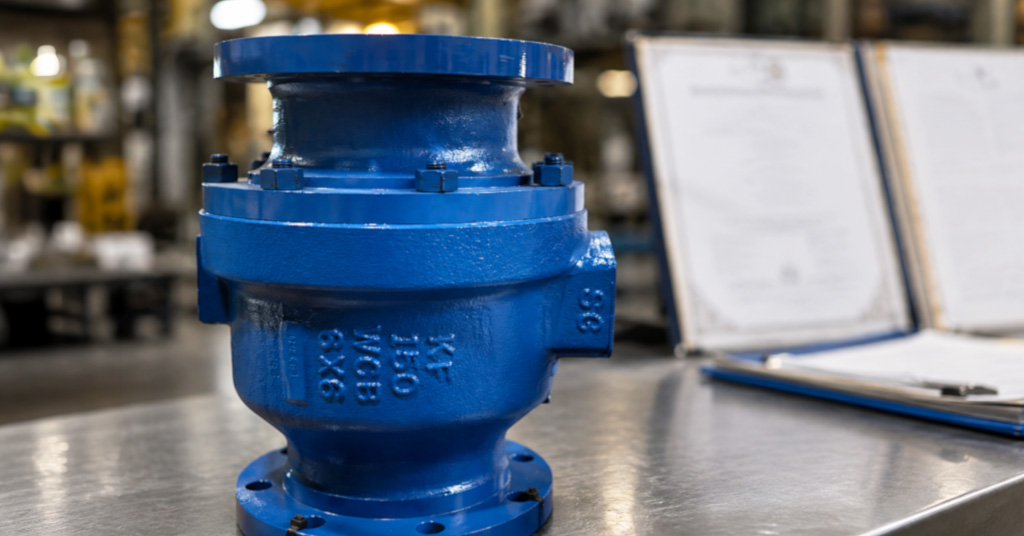
KF Valves holds API Q1 registration for the design, manufacture, and repair of ball valves and check valves. That registration supports the company’s broader commitment to quality, compliance, and reliability for the oil and gas market.
For customers, this means KF is not only focused on producing dependable valves. It also means the company operates within a recognized quality management framework designed for the demands of petroleum and natural gas applications.
From API 6D pipeline valve requirements to API Q1 quality management, KF Valves continues to support customers with products and processes built around performance in the field.
Frequently Asked Questions About API Q1 Certification
What does API Q1 certification mean?
API Q1 certification means an organization has a quality management system that conforms to API Spec Q1 requirements for manufacturers serving the petroleum and natural gas industry.
Is API Q1 the same as API 6D?
No. API Q1 focuses on the manufacturer’s quality management system. API 6D focuses on product requirements for pipeline valves.
Why does API Q1 matter for valve manufacturers?
API Q1 helps ensure that valve manufacturers follow controlled processes for quality management, design, purchasing, production, inspection, testing, documentation, and continuous improvement.
Does API Q1 apply to oil and gas products?
Yes. API Q1 is specifically geared toward organizations that provide products for the petroleum and natural gas industry.
Why should buyers care about API Q1 certification?
Buyers should care because API Q1 certification supports confidence in the manufacturer’s processes, documentation, traceability, and ability to consistently provide reliable products.
Final Thoughts
In oil and gas applications, quality has to be more than a promise.
It has to be supported by process, documentation, testing, traceability, and accountability.
API Q1 certification helps provide that structure. It gives engineers, operators, distributors, and procurement teams added confidence that a manufacturer is working within a quality management system built for the realities of the petroleum and natural gas industry.
For KF Valves, API Q1 is part of a larger commitment to reliable products, disciplined processes, and serious flow control.